
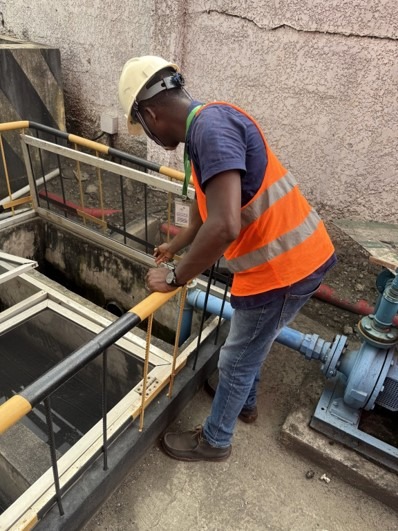
Industrial wastewater is one of the most important environmental issues facility managers must control.
Water used in manufacturing, washing, cooling, processing, cleaning and other industrial activities can pick up pollutants before leaving a facility. Depending on the operation, wastewater may contain suspended solids, oils, chemicals, organic matter, metals, nutrients or other contaminants.
Where such wastewater is discharged without adequate control, it can affect drains, rivers, groundwater, soil and surrounding communities.
This is why industrial effluent monitoring should be treated as an operational responsibility rather than simply a laboratory exercise.
What Is Industrial Effluent?
Effluent is liquid waste discharged from an industrial or commercial activity.
Its characteristics depend on the process generating it. Wastewater from a food-processing facility will not necessarily contain the same pollutants as wastewater from a metal-processing plant, chemical facility or manufacturing operation.
This means that effluent monitoring programmes should be designed around the activities actually taking place at the facility.
Why Effluent Monitoring Matters
Regular monitoring helps facility managers answer several important questions:
- What is actually leaving the facility?
- Is the wastewater treatment system working effectively?
- Are pollution levels increasing or decreasing?
- Is the discharge meeting applicable requirements?
- Is there a process failure that management has not yet noticed?
- Could the discharge pose a risk to nearby water bodies or communities?
NESREA’s regulatory framework provides controls on effluent discharge and empowers the Agency to establish and enforce effluent limitations outside the oil and gas sector.
Important Parameters
The parameters to be analysed depend on the industry and the receiving environment.
- pH
- temperature
- Total Suspended Solids
- Total Dissolved Solids
- Biochemical Oxygen Demand
- Chemical Oxygen Demand
- oil and grease
- nutrients
- metals
- conductivity
- microbiological indicators, where relevant
The applicable limits should always be determined from the relevant regulation and discharge situation rather than applying one generic standard to every facility.
Sampling Is as Important as Laboratory Analysis
An accurate laboratory result begins with proper sampling.
A sample collected at the wrong location, at an unrepresentative time or with contaminated equipment may produce a technically valid laboratory number that does not reflect the facility’s real discharge.
A sound monitoring programme should therefore consider the correct sampling point, production conditions during sampling, treatment system status, sampling containers, preservation requirements, holding time, chain of custody, laboratory competence and field observations.
Facility managers should also document whether production was normal, reduced or temporarily suspended at the time of monitoring.
Do Not Focus Only on the Final Discharge
One common mistake is to monitor only the final outlet.
Where a result exceeds a limit, management may then struggle to determine where the problem originated.
Better environmental management involves understanding the wastewater pathway throughout the facility. Monitoring strategic points within this pathway can help identify the source of abnormal pollution levels.
What Should Management Do With the Results?
Environmental monitoring should produce management action.
Where a parameter is outside the applicable limit, the response should not end with filing the laboratory report.
The facility should investigate possible causes such as treatment system malfunction, chemical overdosing, inadequate retention time, unusual production conditions, poor housekeeping, oil leakage, blocked drains or excessive wastewater loading.
Corrective action should then be documented and followed by appropriate verification.
Keep Historical Data
One laboratory result gives information about one monitoring period. A series of results provides a trend.
Facilities should maintain environmental monitoring data in a format that allows management to compare performance over time. Trends can reveal deterioration in treatment efficiency before the system fails completely.
Good records are also valuable during Environmental Audits and regulatory inspections.
Prevention Is Better Than Treatment
Wastewater management should begin inside the production process.
Reducing water consumption, preventing chemical losses, controlling spills and segregating contaminated streams may reduce the burden placed on the treatment system.
In many cases, the most effective effluent control begins before wastewater reaches the treatment plant.
How Ecobinder Can Help
Ecobinder Services Limited provides water, wastewater and effluent monitoring, environmental compliance assessment and related environmental consultancy services.
Our work focuses not simply on generating laboratory results, but on helping facilities understand what those results mean for compliance and environmental performance.
Good effluent management begins with knowing what you discharge, where it comes from and how consistently it is controlled.